


Barcelona has plenty of buildings that look good on Instagram. The Sagrada Família isn’t one of them. It doesn’t perform for the camera — it overwhelms it. This is not a church you “tick off.” It’s a building that unfolds slowly, often long after you’ve left. And if you’ve ever found yourself staring up at its ceiling in silence, you’ll understand why some places don’t belong only in memory — they belong on your wall.
1. It’s a 140+ year architectural experiment still unfolding
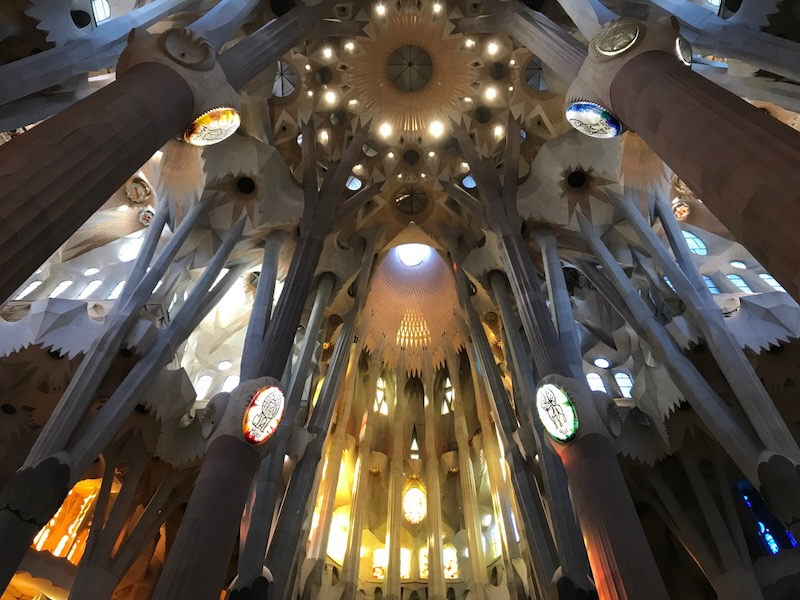
Construction began in 1882, and Antoni Gaudí transformed it into something radically new — a living structure guided by geometry, gravity, and nature rather than rigid plans. The ceiling you see today is the result of generations interpreting Gaudí’s vision using modern tools, mathematics, and recovered fragments of his work. When you look up, you’re not just seeing decoration — you’re seeing time layered into stone. That sense of continuity is what makes the interior so powerful. It feels ancient and futuristic at once.
2. The ceiling is a forest, not a roof
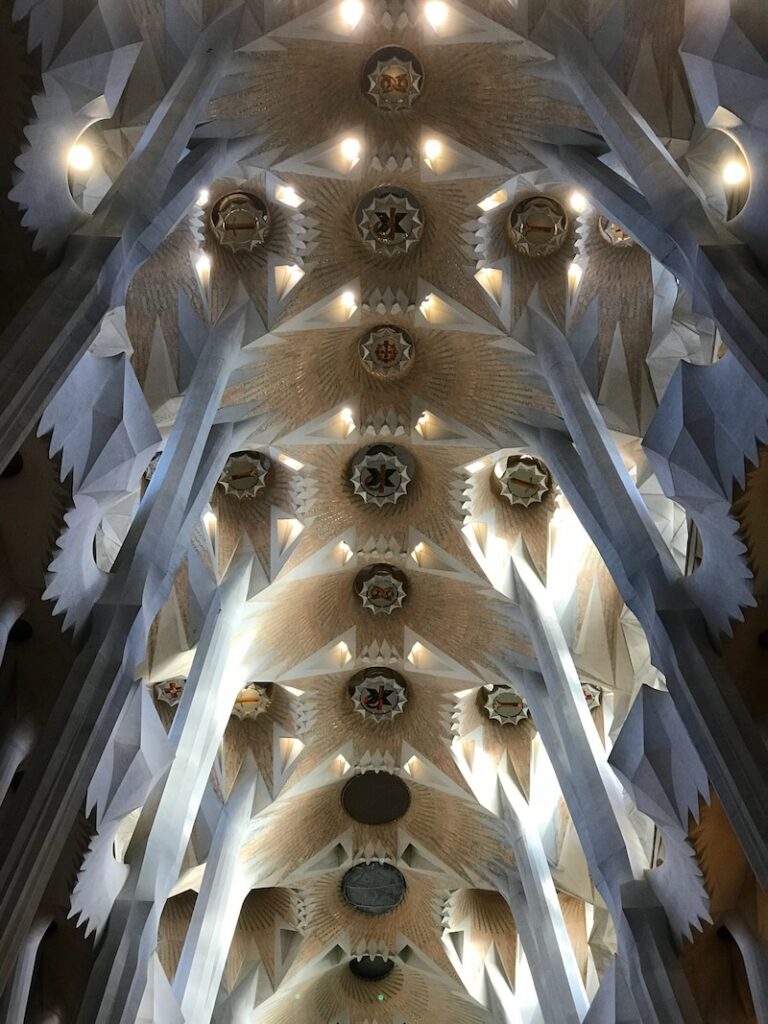
Gaudí rejected traditional Gothic vaulting and instead created columns that branch like trees, distributing weight organically. The ceiling isn’t there to impress — it’s there to work, and beauty is the by-product. From below, those branching forms pull your eye upward, naturally slowing you down. It’s one of the rare interiors where silence feels like the correct response. That upward rhythm — the geometry, the repetition, the calm — is exactly what makes the ceiling such a compelling subject for art.
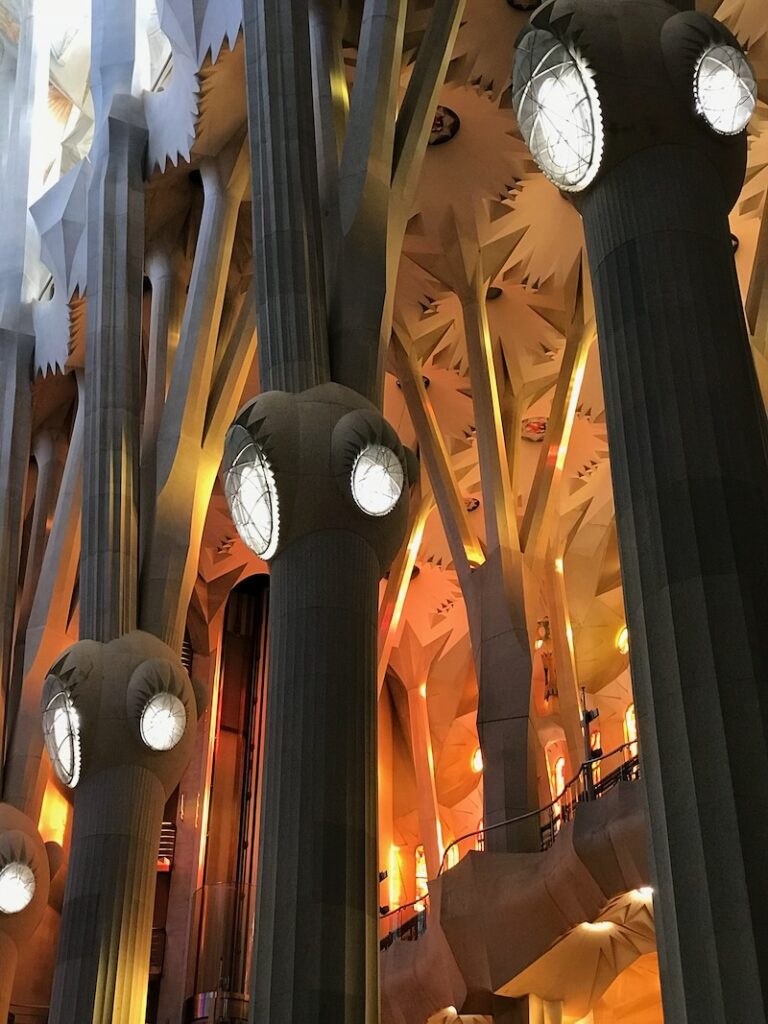
3. Light turns architecture into emotion
The stained glass doesn’t simply colour the space — it choreographs it. Morning light arrives cool and meditative. Afternoon light floods the ceiling with warmth. The stone absorbs and reflects colour so subtly that the building feels alive. A photograph of this moment isn’t about documentation. It’s about atmosphere — the kind you want to return to.
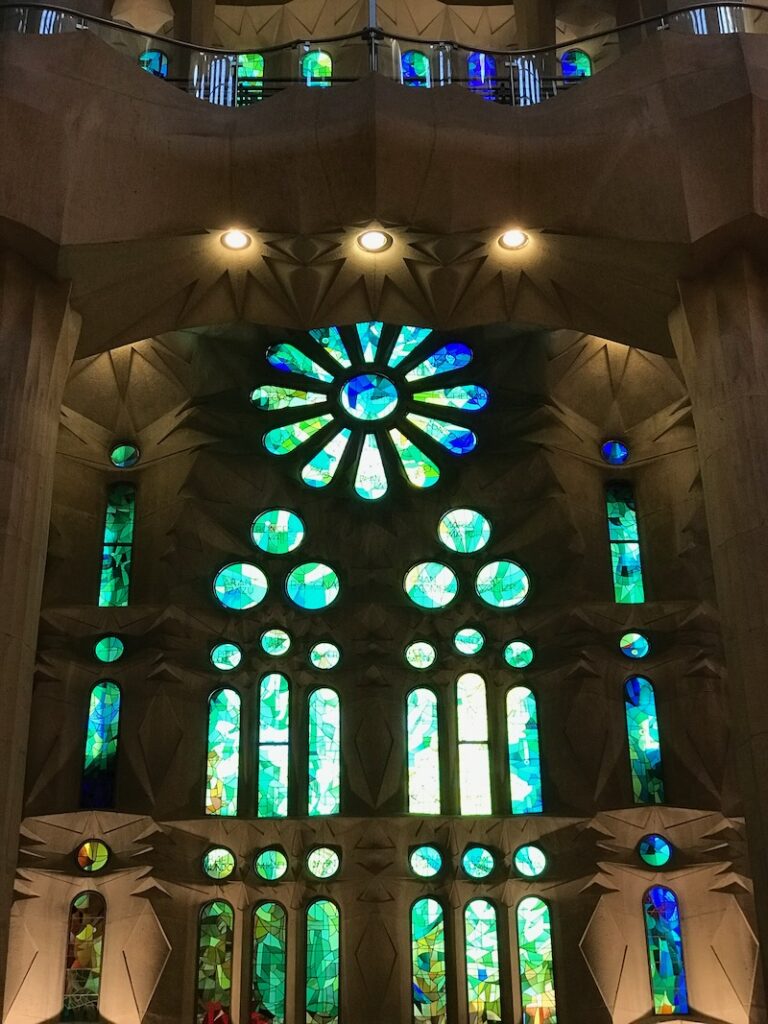
4. It’s Gaudí’s most intimate idea, made monumental
Late in life, Gaudí devoted himself almost entirely to the Sagrada Família. He lived, worked obsessively, and left behind a building that feels less like a commission and more like a personal manifesto. He’s buried inside the basilica. That knowledge changes how you see the interior. The ceiling stops being “beautiful” and starts feeling intentional — almost confessional.
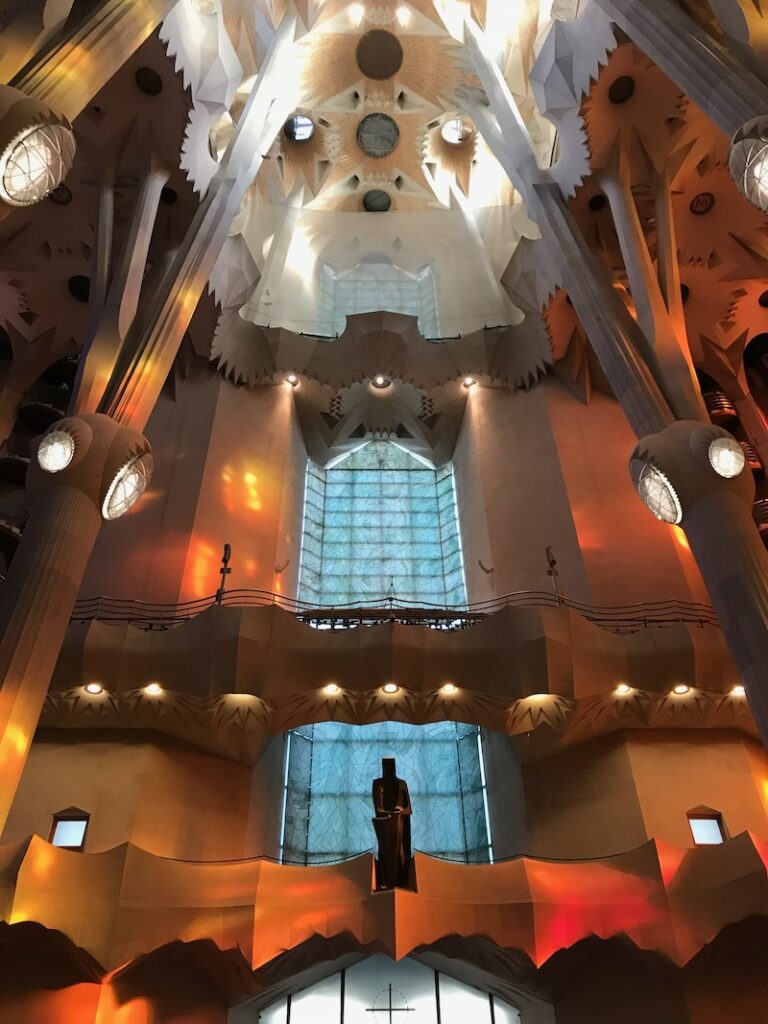
5. Some places deserve to stay with you
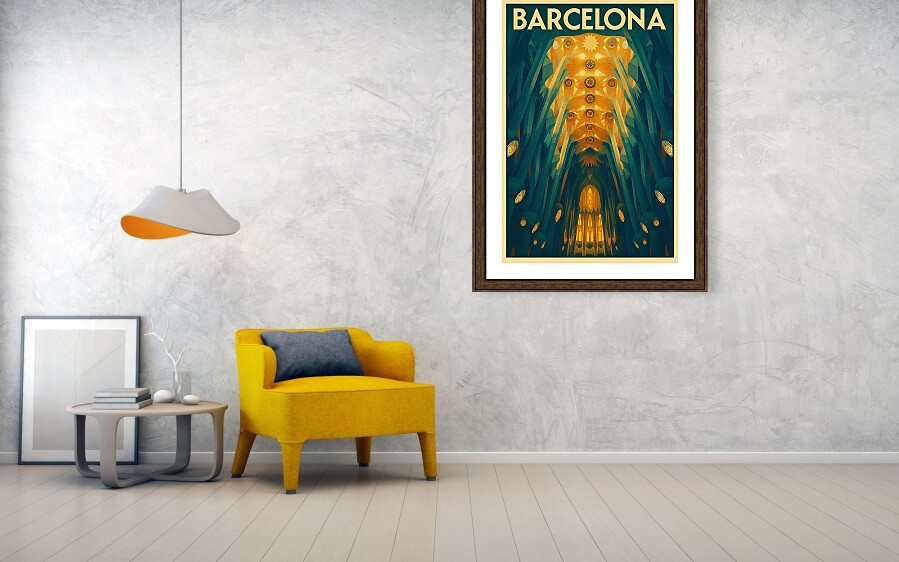
Most travel photos end up forgotten in a phone gallery. But certain spaces imprint themselves differently. The Sagrada Família interior isn’t about spectacle. It’s about scale, calm, and verticality — things that translate beautifully into wall art, especially when treated with restraint rather than excess. That’s exactly the idea behind my Barcelona – Sagrada Família Interior Ceiling vintage-style travel poster.
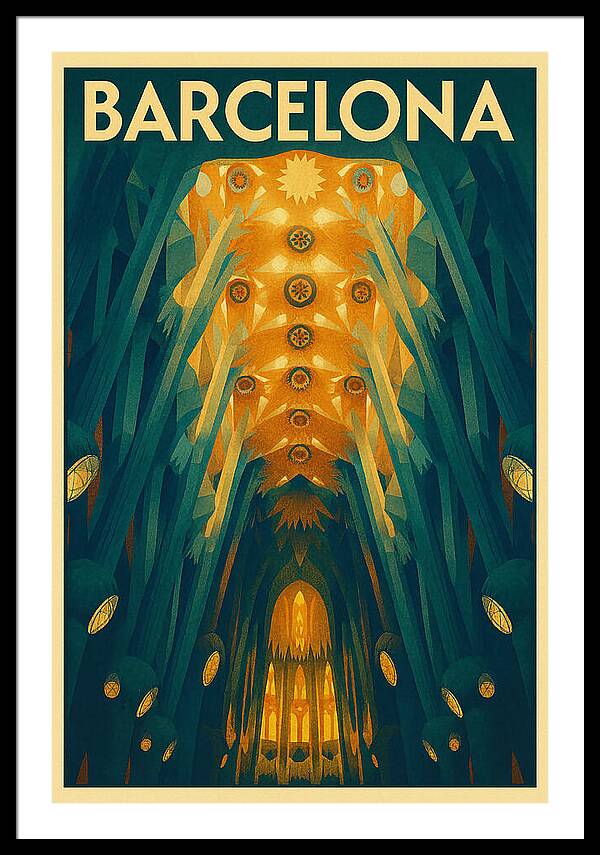
Bringing the Sagrada Família home
The poster focuses on the interior ceiling, where Gaudí’s architectural language is at its purest: branching columns, geometric harmony, and light filtering through space like a quiet cathedral forest. Designed in a vintage travel poster style, it strips away distraction. It leans into mood — making it ideal for: living rooms that need a sense of depth, offices where calm matters, travel-inspired interiors that avoid clichés. Printed as a fine art poster, it’s made to be lived with — not scrolled past. If the Sagrada Família ever made you stop, look up, and forget your phone for a moment, this print is for you. You can find it here: Barcelona – Sagrada Família Interior Ceiling Vintage Travel Poster
You visit the Sagrada Família once. But the feeling it leaves — the light, the geometry, the quiet awe — can stay with you much longer. Sometimes the best souvenir isn’t something you buy on the street. It’s something that reminds you why you travelled in the first place.