

Some buildings never quite forget what they were built for.
Mercat Vell, sitting calmly on Plaça de l’Ajuntament, looks today like a cultural venue — orderly, restored, waiting for exhibitions to come and go. But for decades, it was something far more immediate. This was where Sitges bought its food. Where voices overlapped, where baskets were filled, where the town performed its daily ritual of exchange. Fish, vegetables, gossip, news. Life, compressed into a covered space. Built in 1890, at a time when Sitges was reshaping itself from an agricultural and fishing town into something more modern, Mercat Vell was designed with a purpose: light, air, hygiene, order. Iron and brick replaced informal stalls, tradition adapting to progress. For nearly a century, it functioned as the town’s pulse, a place where the abstract idea of “community” became tangible every morning.
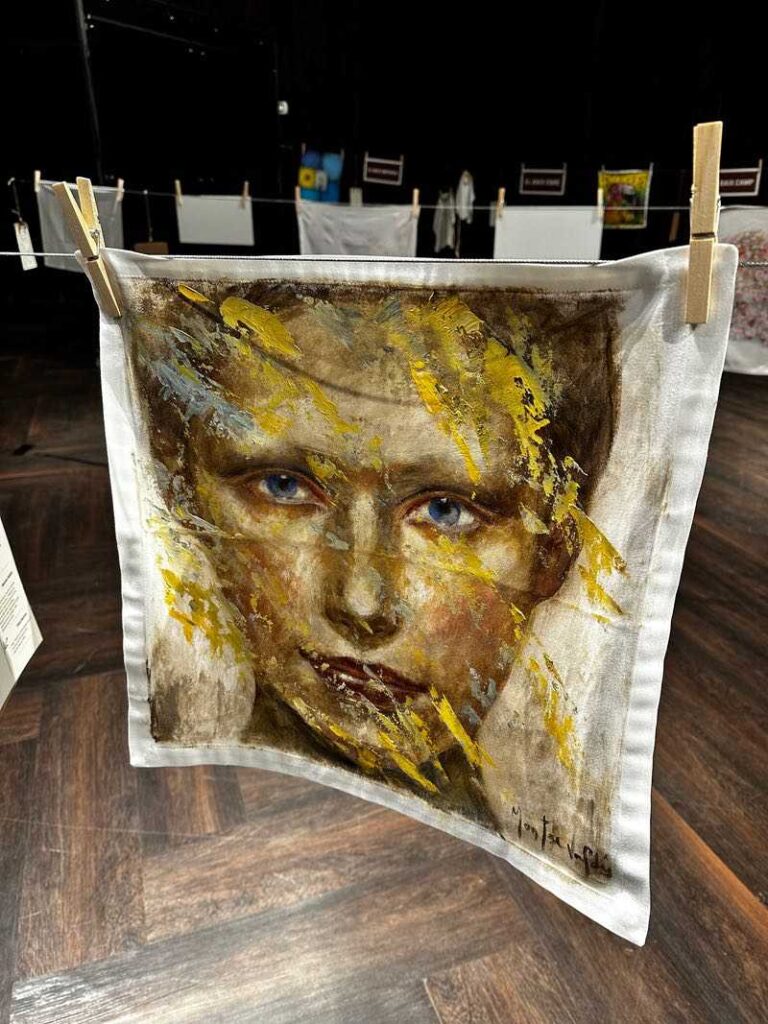
Eventually, of course, the market moved on. A new municipal market opened, habits changed, and Mercat Vell fell silent — not abandoned, but paused. Like many historic buildings in Sitges, it didn’t disappear; it waited. Over the years, it reinvented itself as an exhibition space, a cultural hall, quietly accumulating new layers without erasing the old ones. It is in this context that Tovallons d’Art felt unusually well placed. The exhibition took one of the most disposable objects imaginable — a restaurant napkin — and asked it to carry meaning. Artists from across Catalonia transformed these napkins into small visual statements about territory, cuisine, and identity. Fragile, intimate, temporary. Objects designed to be used once and thrown away, now framed and contemplated.
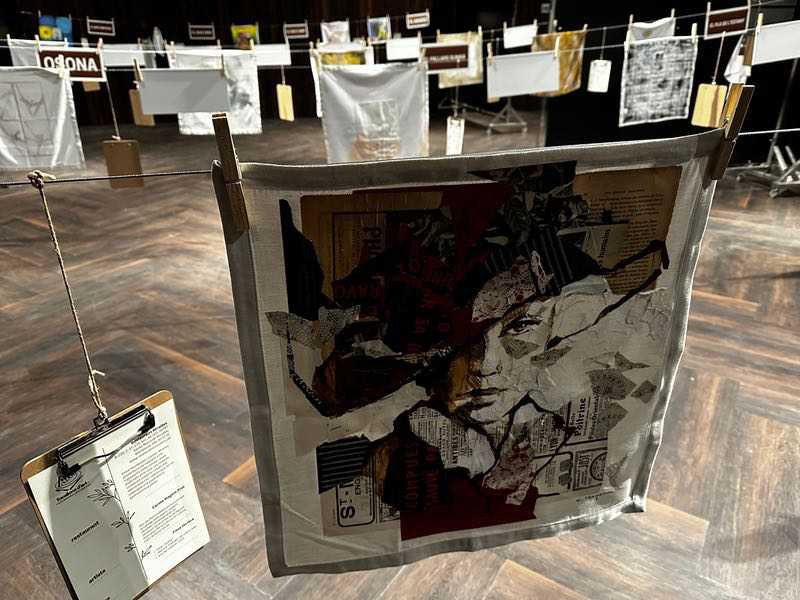
Seen inside Mercat Vell, the gesture felt deliberate. Napkins belong to tables, to meals, to the spaces between eating and talking. Markets, too, are about food — but also about proximity, routine, and shared experience. The exhibition didn’t need to explain this connection; the building did it quietly on its own. Walking through the space, it was hard not to imagine the echoes beneath the artwork: the clatter of crates, the smell of fish, the rhythm of daily shopping. The napkins, marked with paint and ideas, seemed to hover between past and present — contemporary artworks occupying a structure built to serve everyday needs. Art replacing produce, without entirely displacing it.
This is what made Tovallons d’Art feel less like an exhibition and more like a conversation across time. Between cuisine and creativity. Between the domestic and the cultural. Between a building’s original function and its current role.
Today, visitors to Sitges can walk into Mercat Vell without much ceremony. It’s right there, in the old town, steps from narrow streets, cafés, and the sea beyond. You might encounter an exhibition, or simply step inside to admire the architecture — the light filtering through, the proportions, the sense of space designed for gathering.
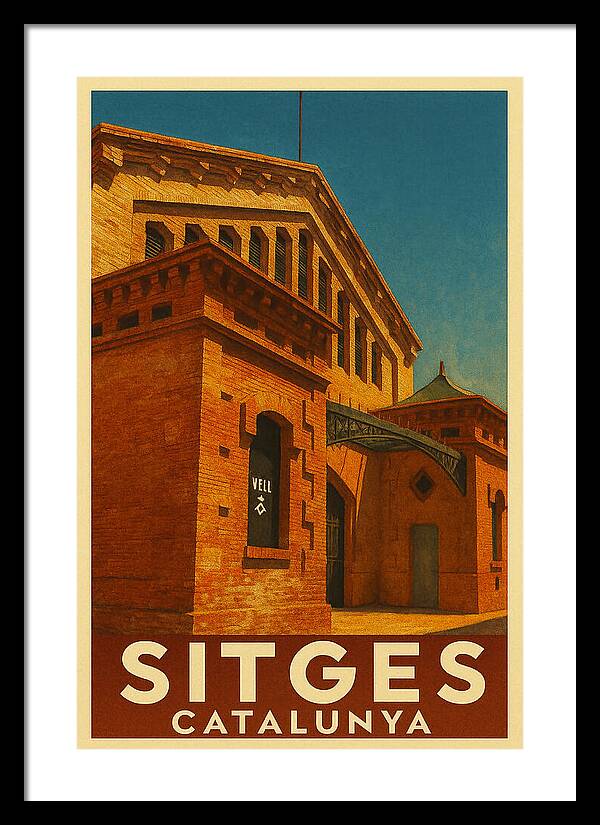
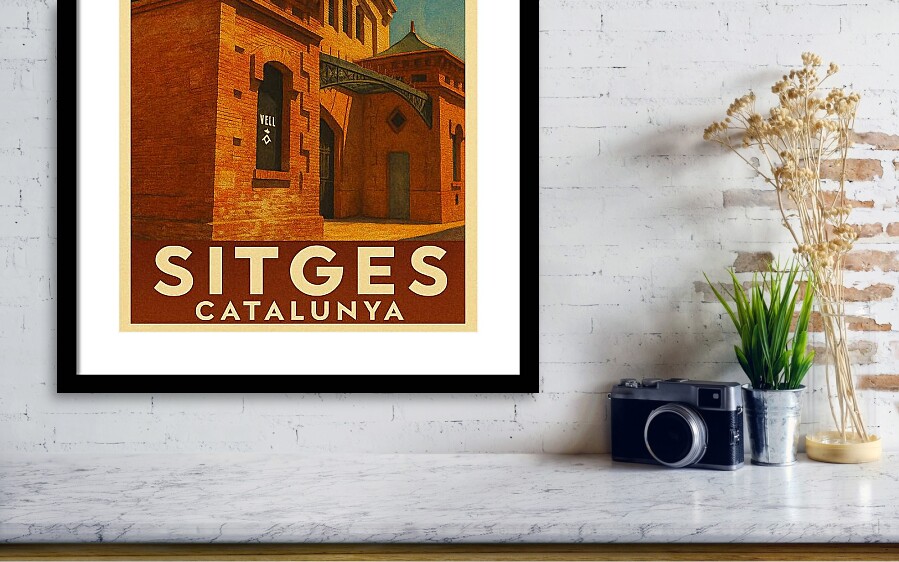
And for those who fall in love with the building, its history, and the quiet magic of Sitges, there’s now a way to bring a piece of that home. The Sitges Old Market – Mercat Vell Vintage Travel Poster captures the rustic and historic beauty of Mercat Vell in warm, earthy tones of brick, gold, and blue sky. The artwork highlights the building’s classic architectural charm and timeless appeal, evoking nostalgia while celebrating the region’s history. It’s an ideal gift for travellers, art lovers, and anyone drawn to the poetry of everyday places — a reminder that culture and memory often reside in the most ordinary corners of life.